


Compliance
Turning lab data into review-ready reports
An industrial hygiene consultancy needed to reduce the time spent turning laboratory data into professional exposure assessment reports. SDTC Digital built a platform that extracts results, applies exposure limits, drafts report sections, and keeps the hygienist in control.
- Previous writing time
- 6–10 hours
- Target generation time
- Under 1 hour
- PDF and Excel
- 2 formats
- Added for US exposure limits
- 1,301 records
Project overview
Manson Methods prepares chemical and noise exposure assessment reports for workplaces. Previously, certified industrial hygienists manually extracted laboratory results, calculated exposures, checked limits, wrote findings, and assembled reports, taking six to ten hours each.
SDTC Digital built a platform that extracts data from supported PDF and Excel laboratory reports, applies jurisdiction-specific exposure criteria, preserves reference sources, performs calculations, and drafts editable report sections.
Hygienists retain responsibility for reviewing results and recommendations before approval. The system produces professional Word and PDF outputs, supports both chemical and noise assessments, and enables controlled beta releases for testing new capabilities.
- Report types
- Chemical and noise exposure
- Lab formats read
- SGS Galson, EMSL, Bureau Veritas
- Extraction accuracy target
- 90%+
- AI providers
- Claude, GPT or Gemini, switchable
Project details
- Report types
- Chemical and noise exposure
- Laboratory formats
- SGS Galson, EMSL and Bureau Veritas
- Extraction target
- 90% or higher
- AI providers
- Claude, GPT, or Gemini, switchable
The challenges
- 01Each exposure assessment report required six to ten hours of manual work from a certified industrial hygienist.
- 02Laboratory results had to be copied from PDF and Excel files, increasing effort and the risk of transcription errors.
- 03Exposure criteria differed across UK and US regulatory or guidance sources, requiring the correct reference for each assessment.
- 04Generated sections needed to match the quality, structure, and judgement expected from a senior consultant.
- 05Chemical and noise assessments required different data, calculations, charts, and report structures.
- 06The consultancy needed to introduce automation without removing professional review or depending on one AI provider.

Project goals
The consultancy needed a platform that could:
- Reduce report generation from six to ten hours to under one hour.
- Extract structured data from supported laboratory PDF and Excel formats.
- Apply relevant exposure limits, calculate exposure results, and achieve at least 90% extraction accuracy.
- Draft professional report sections for hygienist review across chemical and noise assessments.
- Produce Word and PDF reports aligned with existing client templates.
- Support multiple AI providers and expand exposure-limit coverage for US-based assessments.
What we built
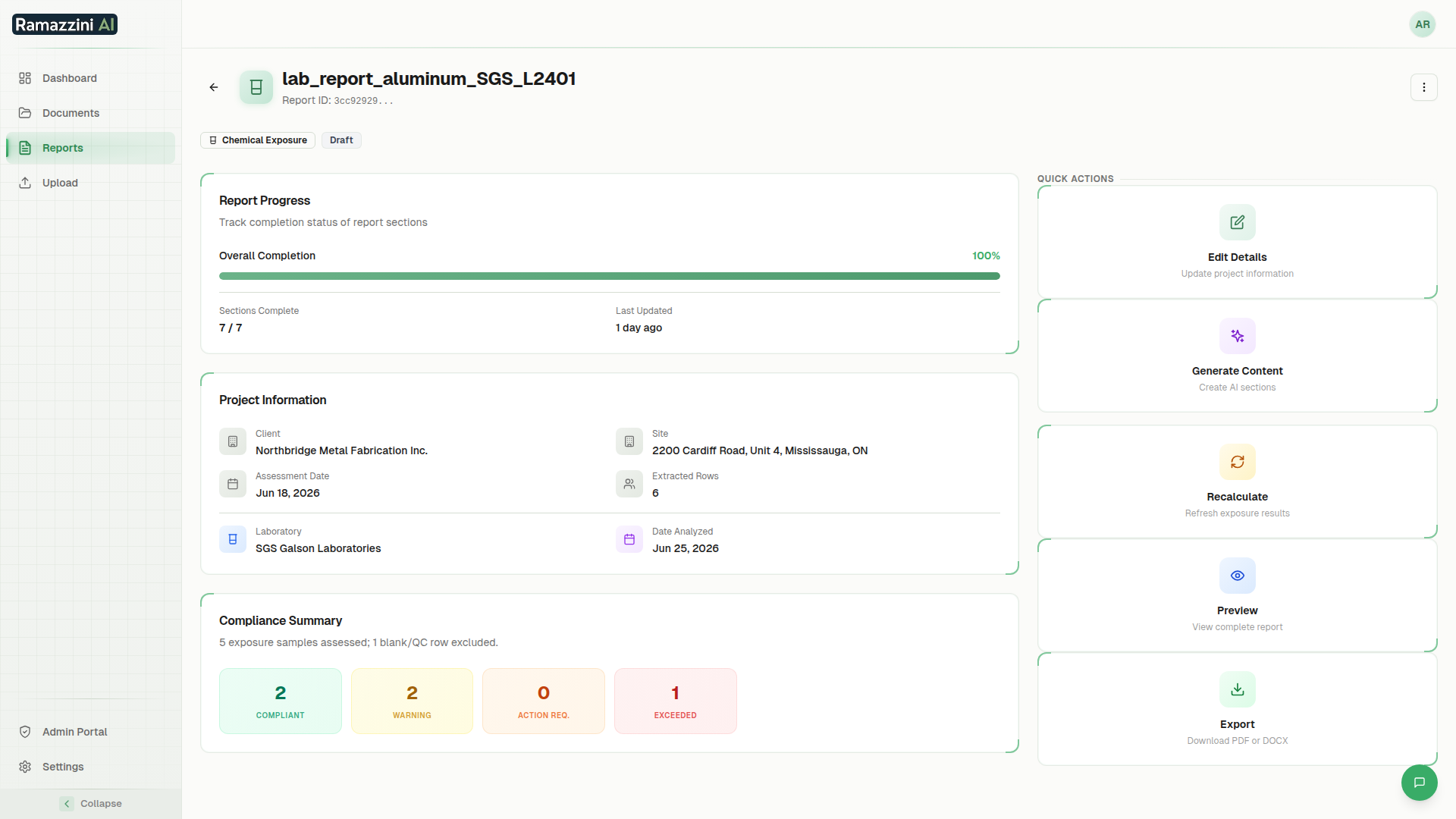
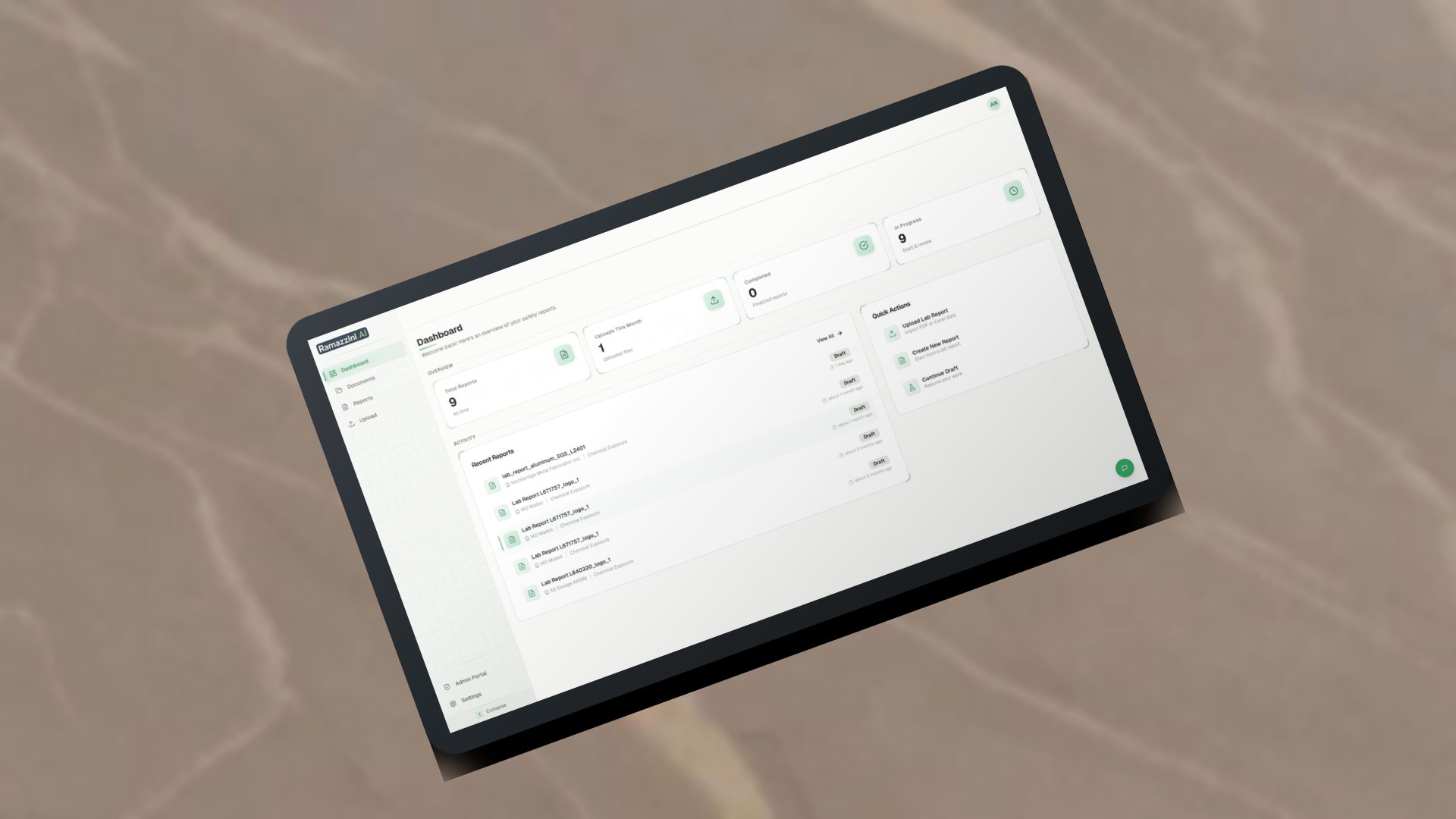
SDTC Digital developed an exposure-reporting platform that connects laboratory ingestion, compliance calculations, AI-assisted drafting, professional review, and document generation.
Automated laboratory data extraction
The platform extracts client details, samples, concentrations, and methods from SGS Galson, EMSL, and Bureau Veritas PDF and Excel reports.
Exposure calculations and limit checks
The system calculates worker exposures, compares limits, and supports combined chemical exposure assessments.
AI-assisted report drafting
The platform drafts report sections for hygienists to edit, regenerate, and approve.
Chemical and noise reporting
Chemical assessments compare exposures with limits; noise assessments import dosimeter data and generate time-series graphs.
Document production and platform control
The system generates Word and PDF reports while administrators manage users, feedback, access, and beta releases.
We provided them with wireframes to start the project, from which they built and launched the app. We are extremely happy with what they built and how long it took to complete.
 Joe SanfelippoPresident, Logistibid Corp
The User Journey
Create the assessment
The hygienist enters the project, workplace, and client details.
Upload the laboratory report
The platform extracts sampling data from a supported PDF or Excel file.
Review the extracted data
The hygienist verifies the results and adds observations, site photographs, and information not included in the laboratory file.
Calculate and draft
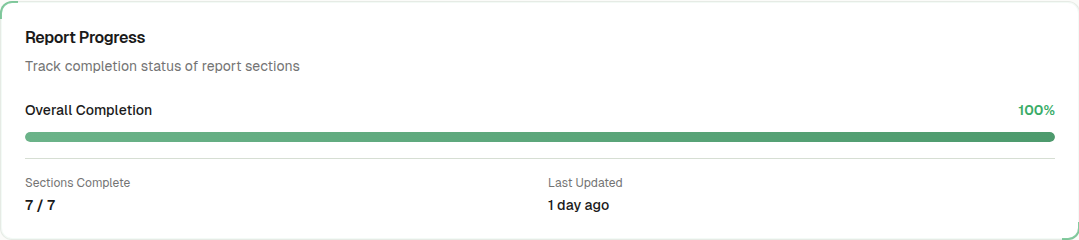
The platform applies the selected exposure criteria, flags relevant results, and generates editable report sections.
Review and export
The hygienist checks the calculations, references, narrative, tables, and charts before producing the final Word or PDF report.
Technology Stack
Application
 Next.js
 TypeScript
 FastAPI
 Python
 PostgreSQL
 SQLAlchemy
AI and retrieval
 Anthropic Claude
 OpenAI GPT
 Pinecone
 Chroma
Document generation
 CraftMyPDF
 react-pdf
Storage and hosting
 AWS S3
 Vercel
Output formats
 Microsoft Word
 PDF
PDF
Testing and Delivery
249
Structured test cases covering laboratory extraction, exposure calculations, AI-assisted content generation, report previews, and document exports.
16
Functional areas tested across the workflow, with chemical reporting available to beta users and noise reporting introduced through controlled releases.
1,301
Additional exposure-reference records added across OSHA, Cal/OSHA, and NIOSH sources to expand US assessment coverage.
2 formats
Word and PDF outputs tested as core parts of the report-generation and professional review workflow.
Outcomes and Business Impact
- A review-led workflow cuts report writing from six to ten hours down to under one; the hygienist still owns every finding, they just stop typing it from scratch.
- Automatic extraction of laboratory data reduces repetitive transcription.
- Exposure calculations and source references are brought into one workflow.
- Editable AI-generated sections require hygienist approval before finalisation, with AI-assisted content generation and report preview testing as the platform's strongest-performing areas, direct validation that AI drafting of regulation-cited content actually works.
- Chemical and noise assessments are supported through the same platform.
- US assessment coverage expanded through 1,301 additional OSHA, Cal/OSHA, and NIOSH records, opening US-based assessments to a platform originally built for one jurisdiction.
- Controlled beta releases let new report types be tested with selected users before wider rollout.
- Freedom to switch AI providers (Claude, GPT, Gemini) as quality, cost, or business requirements change, so the platform isn't married to one vendor's roadmap.
More work
Every engagement
 Healthtech
Making surgery clearance easier to track.
Referrals, pre-authorisations and clearances tracked in one place, with a rules engine that decides when a patient is ready.

Medical E-commerce
Building a sales channel the business could own
A storefront of their own beside a high-volume eBay business, with inventory kept in step both ways and double sales resolved automatically.

Enterprise SaaS
Infrastructure first, features second.
Strategic scorecarding, assessments and innovation pipelines as separately licensable modules, on infrastructure built before feature one.
Still spending specialist time writing reports by hand?
The real opportunity is not to remove the expert. It is to automate extraction, calculations, referencing, and drafting so the expert can focus on reviewing the work that reaches the client.