

Healthtech
Supporting rehabilitation after discharge
A US healthtech company needed two connected portals for remotely monitoring rehabilitation, documenting patient participation, and supporting Remote Therapeutic Monitoring workflows. SDTC Digital designed the platform around physician oversight, patient accessibility, data traceability, and billing controls.
- Physician, patient & admin
- 3 portals
- Target daily physician review
- Under 15 minutes
- Target patient check-in
- Under 2 minutes
- BAA coverage verified
- 5 vendors
Project overview
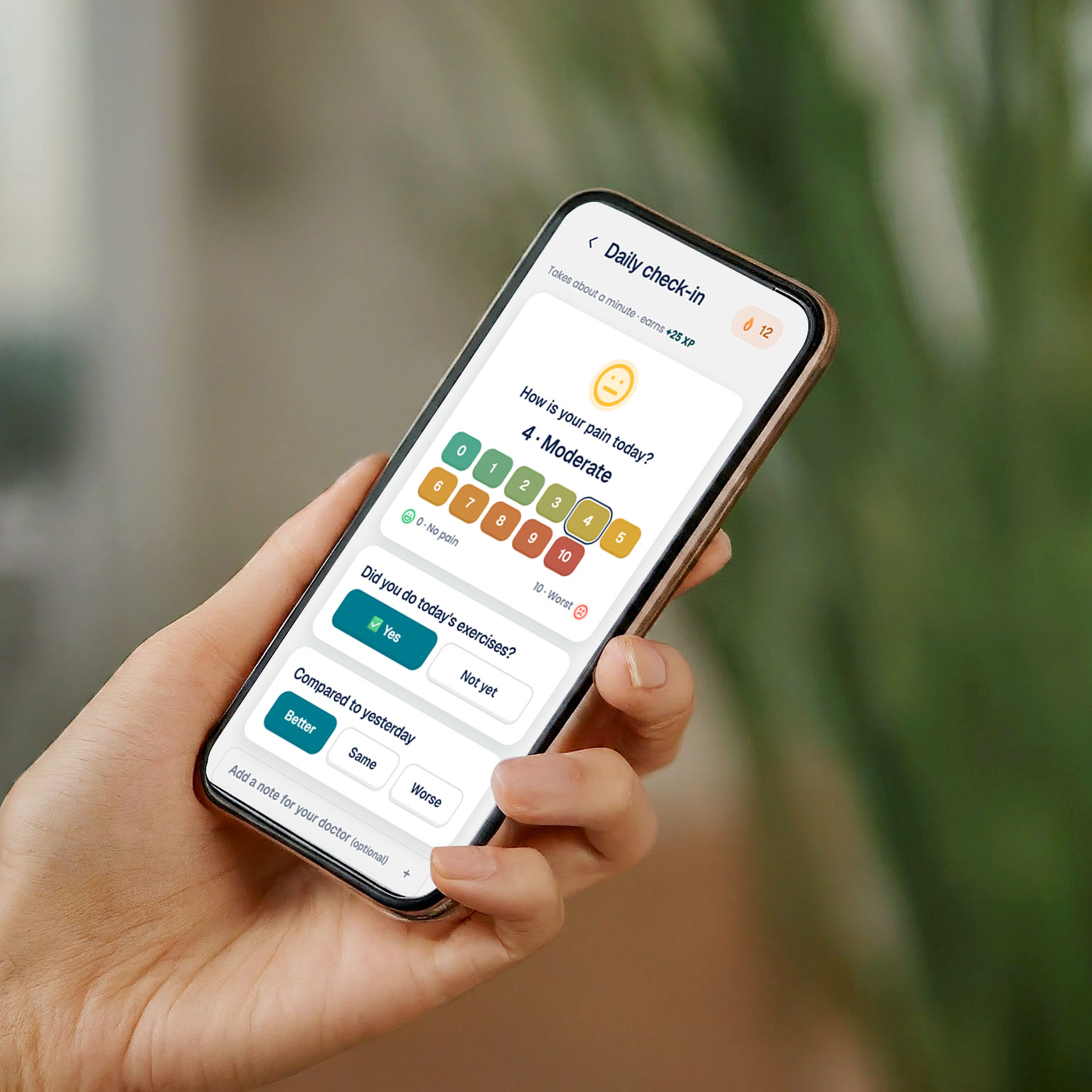
Kivie is building a remote rehabilitation platform that helps physicians monitor patients after in-person physical therapy. It combines a clinical portal for enrolment, care-plan review, participation monitoring, billing-status tracking, and documentation with a patient app for exercises and daily check-ins.
The platform prioritises physician oversight, accessible engagement, and traceable activity. AI may draft rehabilitation plans, but physicians must approve them before delivery. Server-recorded events support billing workflows without manual qualification changes.
Designed for adults aged 60 to 85, the patient experience includes magic-link access, reminders, progress indicators, and simplified interactions. Security, tenant separation, audit logging, and vendor agreement coverage were built into the foundation.
- Regulatory basis
- CMS RTM codes, expanded Jan 2026
- Patient demographic
- Adults 60–85
- Patient app
- Installable PWA, magic-link login
- Vendor BAAs
- Verified across all five
Project details
- Regulatory context
- CMS RTM billing framework
- Patient demographic
- Adults aged 60–85
- Patient experience
- Installable PWA with magic-link access
- Development status
- Both portals live on staging
The challenges
- 01Patients completing physical therapy needed a simple way to report progress and stay connected with their care team.
- 02Physicians needed focused visibility into patient participation without increasing daily workload.
- 03The platform needed to track code-specific RTM activities, professional time, and communication without allowing manual billing-status changes.
- 04Protected health information required access controls, encryption, audit logging, and vendor agreements from the foundation.
- 05Daily participation was needed to remain accessible for adults aged 60 to 85, including those less familiar with healthcare applications.
- 06AI-generated care plans required physician review and approval before reaching patients.
Project goals
The healthtech company needed a platform that could:
- Connect physicians and rehabilitation patients through two purpose-built portals.
- Help physicians review patient activity in under 15 minutes a day.
- Keep the patient check-in process under two minutes.
- Track the activities required to support applicable RTM billing codes.
- Require physician approval before an AI-generated care plan reaches a patient.
- Protect health information through role-based access, encryption, tenant isolation, and audit logging.
What we built
SDTC Digital developed the foundation for a two-sided remote rehabilitation platform covering patient enrolment, care-plan approval, daily participation, physician review, billing qualification, and administration.
Physician and patient portals
Two purpose-built portals connect physicians and patients.
Physician-supervised rehabilitation engine
Claude generates draft rehabilitation plans requiring physician review and approval.
RTM billing and documentation engine
Server-recorded activity supports billing-status review without guaranteeing eligibility or reimbursement.
Clinical knowledge and patient engagement
Clinical updates undergo testing, while reminders and progress features encourage participation.
Security, administration, and platform operations
Tenant separation, encryption, multifactor authentication, audit records, subscriptions, and vendor reviews support operations.
They have great customer service. They not only commit to the business, but to the idea. They are very good listeners. They can also enlighten and teach you and make your idea even more fantastic. They have the knowledge and that was priceless. Everything about them is great. We went to India and they treated us like family.
 Larizza V. MayaCEO, Pro-Skool
The User Journey
Enrol the patient
The physician creates the patient record and starts the rehabilitation workflow.
Generate and approve the plan
The engine drafts a plan; the physician reviews, edits, and approves it.
Complete the daily check-in
The patient accesses the app securely and records daily rehabilitation activity.
Review patient activity
The physician reviews prioritised patients requiring follow-up or communication.
Review billing status
The platform evaluates recorded activity; the physician reviews documentation before approval.
The Thinking Behind the Platform
- 01Clinical approval: AI-generated plans require physician review before reaching patients.
- 02Billing integrity: Qualification is calculated from recorded activity and code-specific rules.
- 03Accessible participation: Magic links, short check-ins, and simplified screens support older patients.
- 04Prioritised review: Physicians see patients requiring attention first.
- 05Controlled governance: Clinical changes are tested before production approval, while AI usage, tenant access, and clinical, billing, and administrative actions are logged.
Tech stack
Platform and data
 Supabase
 PostgreSQL
- Row-Level Security
- Realtime
- Storage
AI and messaging
 Anthropic Claude API
 Twilio
 SendGrid
Access and billing
 OAuth 2.0 (Google, Microsoft 365)
- Mandatory TOTP MFA
 Stripe
 PWA
PWA
Testing and Delivery
403
Structured test cases authored across authentication, tenant isolation, audit logging, billing logic, and core provider workflows.
6 milestones
Delivery plan covering the platform foundation, security controls, RTM billing engine, provider workflows, patient experience, and release preparation.
9 people
Dedicated team supporting architecture, development, clinical workflows, security, testing, and staged delivery.
5 of 5
Vendor BAAs reported as verified during the foundational build, with both portals available in staging and critical components subject to release controls.

Outcome and Business Impact
- Connected remote rehabilitation platform for physicians and patients, providing continued support after in-person physical therapy ends.
- Daily patient check-ins take about 2 minutes, designed to encourage participation and built for patients aged 60 to 85 from day one, not retrofitted later.
- Physician review is designed to take about 15 minutes, with every AI-generated rehabilitation plan requiring physician sign-off before a patient sees it, enforced by the platform rather than a policy.
- Billing runs on event-based documentation, with physician approval, AI cost visibility, and organisation-level oversight built in.
- Tenant isolation, encryption, audit logging, and five vendor Business Associate Agreements were verified before a single patient-facing feature shipped.
- 403 test cases cover authentication, tenant isolation, audit trails, and billing logic; both physician and patient portals are already running on staging.
More work
Every engagement
Transport
Turning every call into a booking.
Phone and web bookings answered by AI, written straight into the dispatch system, then rebuilt as a product other operators can buy.

Healthcare
Answering pharmacy calls without adding headcount.
An AI phone receptionist covering twenty stores around the clock, each with its own knowledge base and its data walled off from the rest.

Healthtech
Building an e-prescription platform around trust, access, and scale.
Clinic management and electronic prescribing with eIDAS-compliant signatures, and a pharmacy lookup that needs no account at all.
Like to build healthcare software for clinical and billing needs?
In regulated healthtech, documentation, patient safety, security, and billing integrity cannot be added after the core workflow is complete. They need to determine how the platform works from the beginning.